Efflorescence on North Carolina Pavers: Causes, Removal & Prevention

Updated: Aug 12
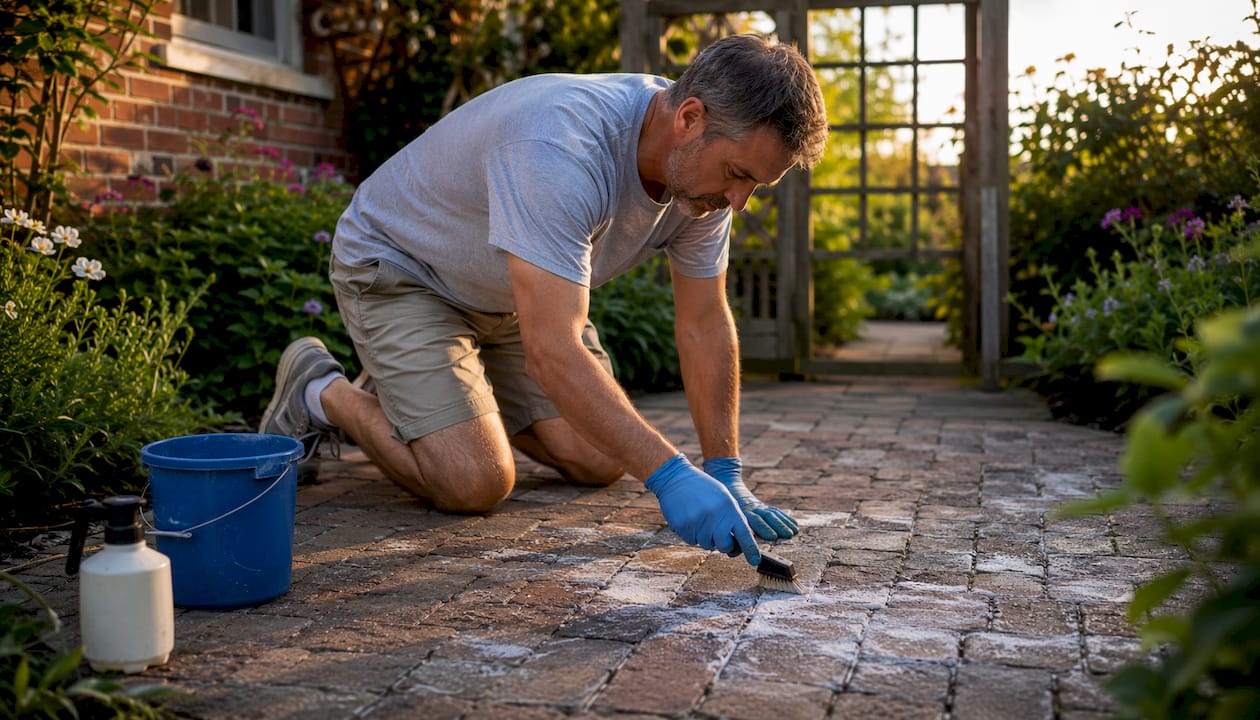
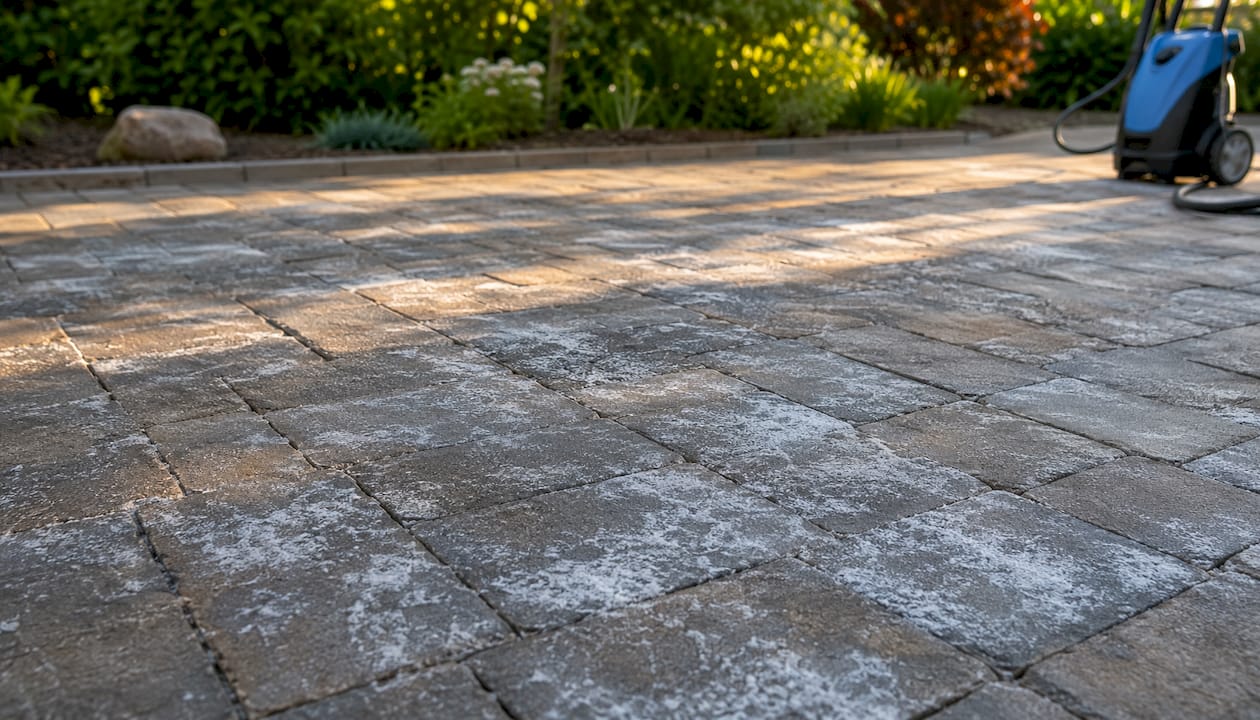
That white, chalky film on your patio or driveway pavers is efflorescence. It’s calcium carbonate, formed when moisture moves through concrete, dissolves soluble salts inside, and carries them to the surface where the water evaporates and leaves the deposit behind. The good news: efflorescence is purely cosmetic and does not affect the structural integrity or durability of your pavers.
Common signs include:
A white or grayish powdery haze across the paver surface
Chalky film that disappears when wet, then reappears as pavers dry
More visible on darker-colored pavers
Appears within weeks to months after installation, or after heavy rain cycles
Need professional paver cleaning and sealing in Cary, Apex, or Raleigh? Explore Truesealcoating’s Clean & 7-Year Seal service.
What causes efflorescence on pavers?
Three conditions must exist simultaneously for efflorescence to form: soluble salts in the material, moisture to dissolve and transport them, and a path to the surface. Remove any one of those, and it stops.
The most common moisture sources and contributing factors include:
Rain, irrigation, and poor drainage pooling water beneath or on pavers
Groundwater rising through capillary action in the base materials
High cement content in the pavers themselves, which produces calcium hydroxide during curing
Soluble salts present in bedding sand, aggregate base, or surrounding soil
Humidity and temperature swings that accelerate moisture cycling through the paver body
New pavers are especially prone because they carry extra moisture and free salts from manufacturing. That first bloom is the material shedding what it was made with, not a sign of a defective product.
Is efflorescence a structural problem or just cosmetic?
Efflorescence does not affect the structural performance or durability of concrete pavers. According to NCMA guidance and industry standards, it is a cosmetic surface deposit, full stop.
“Efflorescence is a powder-like deposit of soluble salts and bases, usually white in color, that sometimes appears on the surface of natural stone, clay brick, concrete pavers, or any other porous building material. Although it may be an aesthetic concern, efflorescence will not affect the structural performance of your product.” — Techniseal
The real risk comes from how homeowners respond to it. Aggressive acid washes etch the paver surface, weaken the cement matrix, and expose fresh calcium hydroxide underneath, which drives more efflorescence in subsequent months. High-pressure washing alone scars surfaces and blasts joint sand out of place. The treatment, done wrong, causes more damage than the deposit itself.
How to permanently remove efflorescence from pavers
Start with the gentlest method that works, then step up only if needed.
Dry brushing: Use a stiff brass or plastic bristle brush on a dry day. Avoid steel brushes — they rust and stain pavers. Dry is better than wet here, because adding water can redissolve the salts and push them back into the paver.
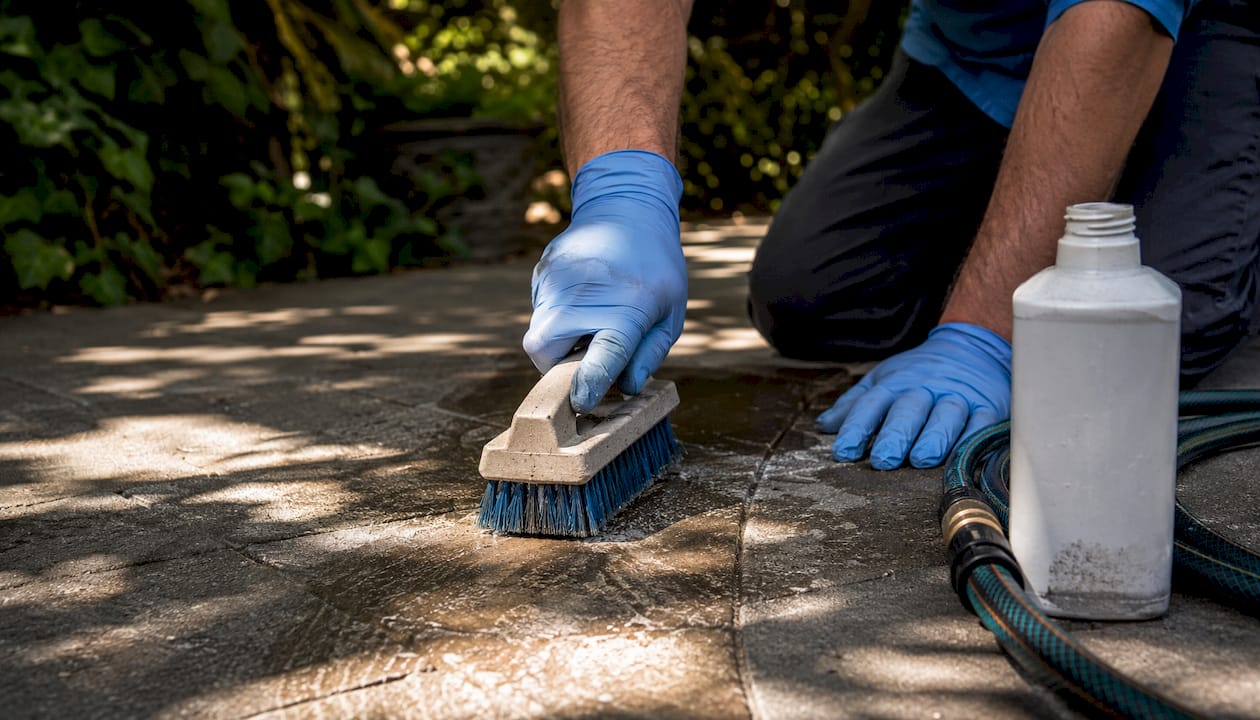
Low-pressure rinse and scrub: For moderate buildup, rinse with 30–100 psi and scrub thoroughly. Rinse so the salty water runs off, not back into the joints.
Efflorescence cleaner: For stubborn or hardened deposits, use a cleaner formulated specifically for pavers. Dilution matters: new pavers need a stronger mix (1 part product to 3–5 parts water), while older or previously sealed pavers call for a gentler ratio (1:6–8).
Professional cleaning: For large areas or severe cases, professional equipment and chemistry deliver better results without surface damage.
Pro Tip: Let the cleaner dwell for several minutes before rinsing. That contact time is what breaks the chemical bond between calcium carbonate and the paver surface. Rushing the rinse is the most common reason efflorescence reappears within days.
Does efflorescence naturally disappear over time?
Yes, and often it does so on its own. Efflorescence is a self-limiting process that typically ceases within 18–24 months as the supply of calcium hydroxide inside the paver exhausts itself.
Typical dissipation timeframe: 18–24 months for new-paver efflorescence, as soluble salts are gradually depleted through natural moisture cycling and weathering.
Rain accelerates the process by washing calcium carbonate away. In areas with acidic rainfall or frequent wet-dry cycles, like much of Wake County, the bloom often clears faster than in drier climates. Persistent efflorescence that keeps returning well after installation is a different signal. It means an ongoing moisture source, such as poor drainage or irrigation overspray, is continuously feeding the process.
Do you need to remove efflorescence before sealing pavers?
Yes, always. Sealing over efflorescence traps the deposits beneath the coating, causing whitening, blushing, or a milky haze that cannot be cleaned off without stripping the sealer entirely.
Follow this sequence before any paver sealing service:
Remove all efflorescence using the appropriate method above
Allow pavers to dry completely, at least 48–72 hours after cleaning, before applying any sealer
Use a breathable sealer that allows residual moisture to escape rather than trapping it beneath a film
Confirm the surface is free of haze before the first coat goes down
Non-breathable sealers are a common mistake in humid climates like Cary. When moisture cannot escape, it drives efflorescence sideways through the paver body and causes the sealer to white out, a problem that requires full stripping and re-application to fix.
Prevention strategies and when to call a professional
Controlling moisture is the only way to stop efflorescence from recurring. Cleaning treats the deposit; fixing the water source is what prevents it from coming back.
Pro Tip: Check your sprinkler zones. Irrigation overspray hitting pavers repeatedly is one of the most overlooked causes of recurring efflorescence in Cary neighborhoods. Adjust heads so water lands on the lawn, not the hardscape.
Improve drainage so water sheds away from the paver field rather than sitting beneath it.
Limit irrigation contact with paver surfaces by adjusting sprinkler heads.
Restore joint sand using angular joint sand, not hardening products. Angular sand maintains drainage pathways; hardening products create a rigid, impermeable barrier that traps moisture and accelerates secondary efflorescence.
Apply a breathable sealer after full efflorescence removal and proper drying. Breathable sealers perform better in humid environments by allowing moisture to escape while protecting the surface from new water intrusion.
Schedule professional assessment if efflorescence keeps returning after multiple cleanings, if you see sealer milky-blush, or if haze appears alongside staining or discoloration.
Truesealcoating’s team handles paver cleaning and sealing throughout Cary, Apex, and Wake County, with preparation methods built around North Carolina’s humidity and seasonal moisture patterns.
Does efflorescence naturally disappear over time?
Light efflorescence on new pavers often fades substantially within the first several months as the available salts work their way out and rain rinses the surface. The full process typically runs 18–24 months. Recurring haze that appears long after installation does not self-resolve, because an external moisture source keeps feeding it. In that case, cleaning alone won’t hold, and the drainage or irrigation issue needs to be addressed directly.
Best products for efflorescence removal
Paver-specific efflorescence cleaners outperform generic acid washes every time. Products formulated for concrete pavers use buffered chemistry that dissolves calcium carbonate without etching the surface or leaching color. Muriatic acid does react with the deposit visually, but it also etches the paver surface and exposes fresh calcium hydroxide underneath, which drives more efflorescence in the months that follow.
For DIY use, look for cleaners labeled specifically for concrete pavers or interlocking concrete pavement, and follow the dilution instructions based on paver age. For large or heavily affected areas, professional-grade surfactant chemistry applied with controlled dwell time and a thorough rinse delivers cleaner, longer-lasting results than anything available at a home improvement store.
Step-by-step prevention methods
Prevention comes down to a repeatable sequence, not a one-time fix:
Assess and correct drainage around the paver field before any cleaning or sealing.
Dry-brush any visible efflorescence on a dry day and sweep away the residue.
Clean with a paver-specific efflorescence cleaner at the correct dilution for your paver’s age.
Rinse thoroughly so dissolved salts run off the surface completely.
Allow 48–72 hours of drying time before applying sealer.
Apply a breathable penetrating sealer in two coats with proper flash time between coats.
Inspect joint sand and replace with angular joint sand if depleted or if hardening product was previously used. For more on joint sand issues, see Truesealcoating’s guide to polymeric sand problems.
How humidity and temperature affect efflorescence
North Carolina’s climate creates near-ideal conditions for efflorescence. High humidity slows evaporation, which means moisture stays in the paver longer and carries more salts to the surface before drying. Rapid temperature swings between seasons accelerate the wet-dry cycling that drives salt migration. Spring is typically the worst period, as pavers absorb winter moisture and then dry out quickly in warmer weather.
Shaded areas dry more slowly and tend to show more persistent efflorescence than sun-exposed surfaces. In Cary’s climate, breathable sealers are not optional for long-term paver protection. They allow the moisture that will inevitably enter the paver to escape, rather than trapping it and compounding the problem.
Schedule your paver sealing service with Truesealcoating
If your pavers show white haze, or if they no longer bead water after rain, it may be time for professional treatment. Truesealcoating’s Clean & 7-Year Seal system is built specifically for North Carolina conditions, covering proper efflorescence removal, joint sand restoration, and breathable sealer application in one complete service.
Request your free quote today and protect your pavers before the next wet season.
Key Takeaways
Efflorescence on pavers is a natural, cosmetic process driven by moisture and soluble salts, and it can be permanently resolved by removing the deposit correctly and controlling the moisture source.
Point | Details |
Cosmetic only | Efflorescence does not affect paver strength or durability; it is a surface deposit. |
Self-limiting timeline | New-paver efflorescence typically exhausts itself within 18–24 months as salts deplete. |
Clean before sealing | Pavers must be fully clear and dry for 48–72 hours before any sealer is applied. |
Use breathable sealers | Non-breathable coatings trap moisture in humid climates and worsen the problem. |
Fix the moisture source | Recurring efflorescence signals ongoing water intrusion; cleaning alone will not stop it. |
FAQ
Does efflorescence on pavers go away on its own?
Yes, in most cases. New-paver efflorescence is self-limiting and typically fades within 18–24 months as the supply of calcium hydroxide inside the paver is exhausted through natural moisture cycling and weathering.
How do you get efflorescence out of pavers?
Start with dry brushing using a stiff brass or plastic brush, then move to a low-pressure rinse and scrub if needed. For stubborn deposits, apply a paver-specific efflorescence cleaner at the correct dilution, allow 5–15 minutes of dwell time, and rinse thoroughly.
Will rain wash efflorescence away?
Rain helps gradually, especially in areas with acidic rainfall or frequent wet-dry cycles. However, rain alone rarely clears heavy deposits quickly. It speeds the natural exhaustion of salts but is not a substitute for proper cleaning before sealing.
How do I permanently get rid of efflorescence?
Permanent resolution requires two steps: remove the existing deposits with the correct cleaner and technique, then eliminate the moisture source driving the process. Improving drainage, adjusting irrigation, restoring angular joint sand, and applying a breathable sealer after proper drying all work together to prevent recurrence.
Recommended
Comments