Patio Sealing Options: A Wake County, NC Homeowner's 2026 Guide.

Updated: Aug 13
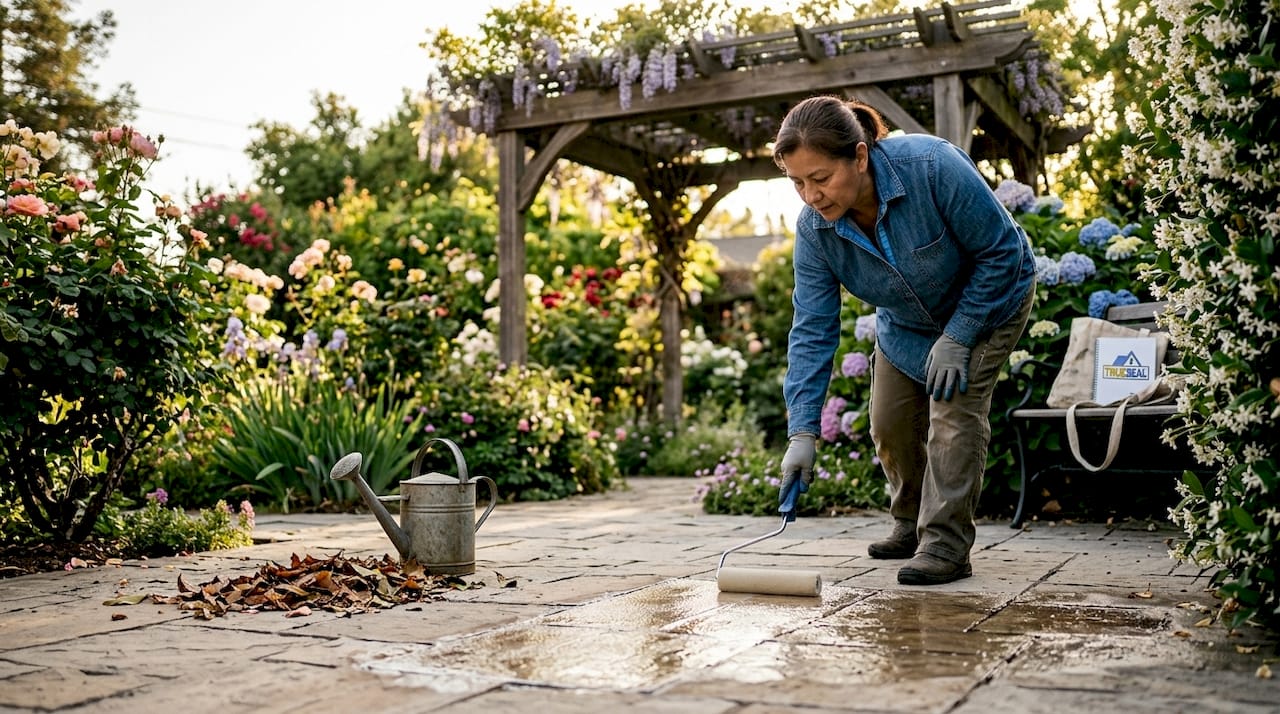
Patio sealing is defined as the process of applying a protective coating or penetrating treatment to outdoor surfaces to guard against moisture, staining, UV damage, and surface wear. The two main categories of patio sealing options are film-forming sealers, which create a visible protective layer on top, and penetrating sealers, which soak into the surface and protect from within. Acrylic-based sealers are the most common choice for residential concrete and paver patios, typically lasting 1–3 years before reapplication. Choosing the wrong type for your surface or climate can lead to peeling, trapped moisture, or a finish that looks worse than before you started.
Need professional patio sealing in Cary, Apex, or Raleigh? Explore Truesealcoating’s Clean & 7-Year Seal service.
What are the main patio sealing options?
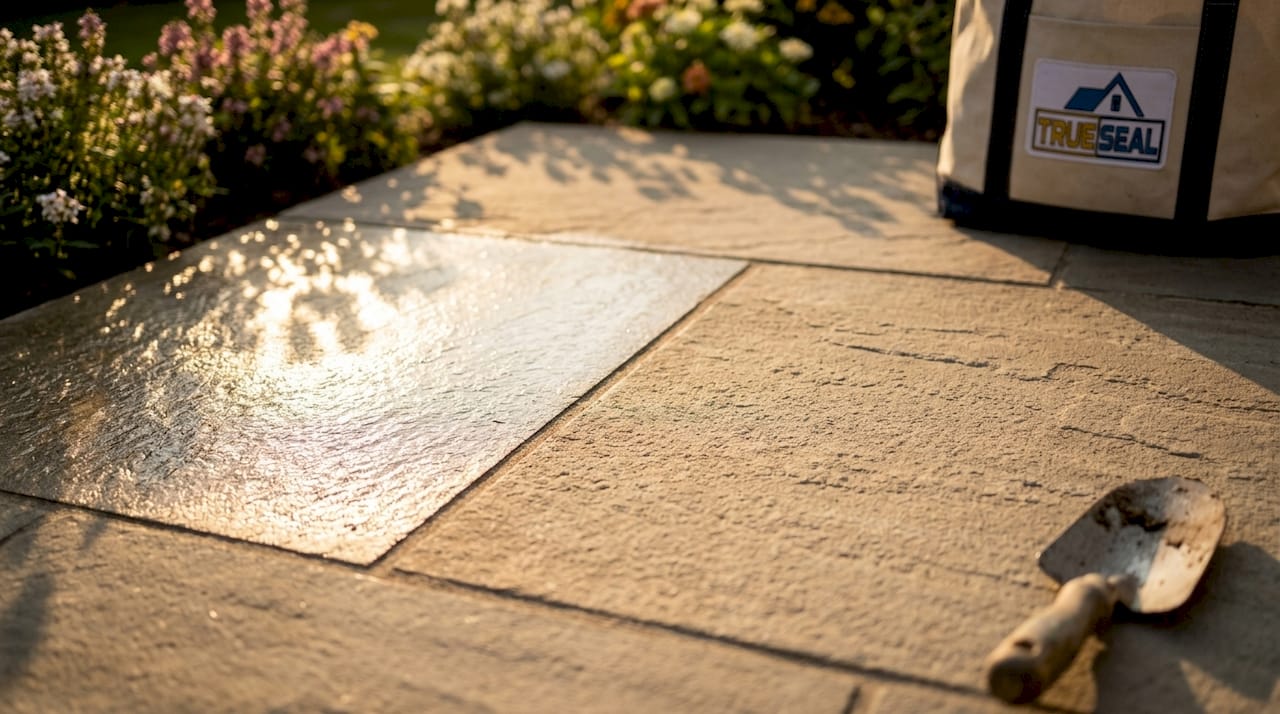
Two primary sealer categories exist for patios: film-forming and penetrating. Each works differently, looks different, and performs better in specific conditions. Understanding the distinction is the single most important step before buying any product.
Film-forming sealers
Film-forming sealers sit on top of the surface and create a visible sheen. They enhance color, making concrete and pavers look richer and darker. They also stabilize joint sand in paver patios, which helps prevent weed growth and keeps pavers from shifting. The tradeoff is that they require a completely dry, well-prepared surface. Applied over moisture, they can peel or develop a whitish haze.
Penetrating sealers
Penetrating sealers are breathable and preserve the natural texture of the surface. They absorb into the pores of concrete, stone, or brick and repel water from within. Because they do not form a surface film, they are preferred for pool decks, natural stone, and shaded patios where slip resistance and moisture management matter most. They leave no visible sheen, so the surface looks unchanged after application.
Feature | Film-forming sealers | Penetrating sealers |
Appearance | Glossy or satin sheen | Natural, unchanged look |
Protection method | Surface coating | Absorbed into pores |
Slip resistance | Lower (can be slippery) | Higher |
Best for | Decorative concrete, pavers | Natural stone, pool decks, shaded areas |
Moisture sensitivity | High (must apply dry) | Lower |
Reapplication frequency | Every 1–3 years | Every 3–5 years |
Joint sand stabilization | Yes | No |
How do you choose the best sealer for your patio material?
The best sealer for a patio depends on the surface material, the amount of foot traffic, and the local climate. Cary and the greater Wake County area see hot, humid summers and wet winters. That combination puts real stress on outdoor surfaces, so matching the sealer to the environment is not optional.
Here is how to think through the decision by material:
Concrete patios: Film-forming acrylics work well for decorative or stamped concrete. They enhance color and protect against staining. For plain gray concrete in a shaded or damp area, a penetrating silane or siloxane sealer is a better fit.
Paver patios: Film-forming sealers are the standard choice for pavers because they lock in joint sand and enhance the color. Make sure the pavers are fully dry and clean before application.
Natural stone (flagstone, slate, travertine): Always use a penetrating sealer. Film-forming products can trap moisture in natural stone and cause spalling or surface damage over time.
Brick: Penetrating sealers preserve the breathability of brick. Film-forming products can cause moisture to build up behind the surface, leading to efflorescence (white salt deposits).
Sealing does not fix poor drainage or structural problems. If your patio holds standing water after rain, that issue must be corrected before any sealer is applied. A sealer applied over a drainage problem will fail faster and may make the underlying issue harder to diagnose.
Pro Tip: Test any sealer on a small, inconspicuous area first. Patios with mixed weathering or varying porosity can show patchy sheen if the product is not compatible with the surface condition.
How to seal a patio: step-by-step from prep to maintenance
Surface preparation is the most important part of the sealing process. A sealer applied to a dirty or damp surface will fail regardless of product quality. Follow these steps to get a result that lasts.
Step 1: Clean the surface thoroughly
Pressure wash the entire patio to remove dirt, algae, mildew, and old sealer residue. For pavers, check that joint sand is intact and topped off before washing. Review proper prep steps before starting, especially if the surface has not been cleaned in over a year.
Step 2: Allow full drying time
This step is where most homeowners make a costly mistake. Applying sealer on damp surfaces traps moisture inside the coating, causing whitening, peeling, or milky blushing. Wait at least 24–48 hours after washing before applying any sealer. In humid North Carolina conditions, 48 hours is the safer choice.
Step 3: Apply the sealer
Tool | Best for | Notes |
Pump sprayer | Large flat areas | Fast coverage, even coat |
Roller (3/8" nap) | Textured concrete | Good control on rough surfaces |
Brush | Edges and tight spots | Use to cut in before rolling |
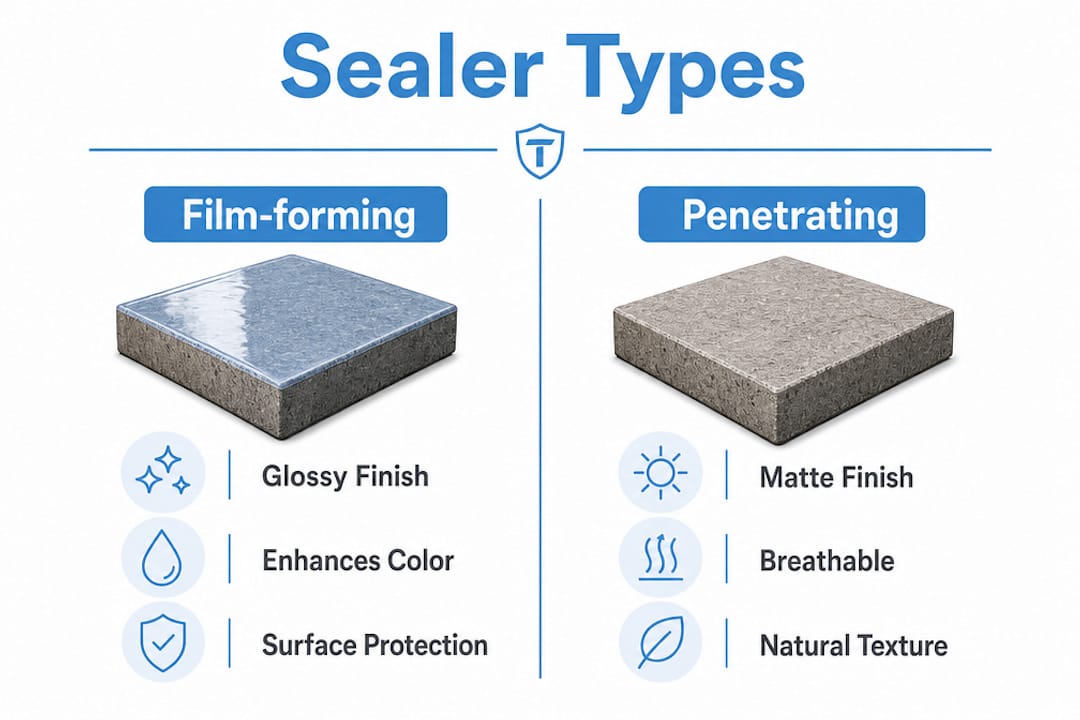
Apply in thin, even coats. Two thin coats outperform one thick coat every time. A thick coat traps air and increases the risk of bubbling or uneven sheen.
Step 4: Allow proper cure time
Most film-forming sealers are dry to the touch within 1–4 hours but need 24 hours before light foot traffic and 72 hours before furniture or heavy use. Check the product label for specifics. Do not apply sealer if rain is expected within 24 hours.
Step 5: Plan for reapplication
Resealing intervals depend on the product and surface:
Acrylic film-forming sealers: every 1–3 years
Polyurethane or epoxy coatings: every 3–5 years
Penetrating silane or siloxane sealers: every 3–5 years
Pro Tip: Do the water bead test annually. Pour a small amount of water on the surface. If it soaks in instead of beading up, the sealer has worn down and reapplication is due.
If your patio no longer beads water, it is time to act. Request a free quote from Truesealcoating and get a surface assessment before the next rain season.
What causes patio sealer problems and how do you fix them?
Most sealer failures trace back to one of three causes: moisture at application, poor surface prep, or the wrong product for the surface. Knowing what went wrong helps you fix it correctly.
Milky or white haze: Almost always caused by moisture trapped under a film-forming sealer. The fix is to strip the sealer, allow the surface to dry completely, and reapply. This is not a product defect. It is an application error.
Peeling or flaking: Caused by applying over a dirty surface, an incompatible old sealer, or a surface that was not fully cured. Strip, clean, and reapply.
Patchy or uneven sheen: Happens when surface porosity varies across the patio. Some areas absorb more sealer than others. A test patch before full application catches this early.
Weed growth through paver joints: Joint sand stabilization is often overlooked. Generic sealers do not always bond joint sand effectively. For paver patios, use a product specifically designed to harden joint sand, or have polymeric sand installed before sealing.
Sealer wearing unevenly in high-traffic zones: This is normal. High-traffic areas wear faster. Spot reapplication in those zones extends the life of the full seal without requiring a complete redo.
Professional sealing delivers long-term ROI by reducing the restoration and replacement costs that come from repeated surface damage. When problems keep recurring despite DIY attempts, a professional assessment is the more cost-effective path.
Key Takeaways
The most effective patio sealing approach matches the sealer type to the surface material, moisture conditions, and traffic level before any product is applied.
Point | Details |
Two sealer categories | Film-forming sealers coat the surface; penetrating sealers absorb into it. |
Material determines choice | Use penetrating sealers for natural stone and brick; film-forming for concrete and pavers. |
Prep is non-negotiable | Sealing over a damp or dirty surface causes peeling, haze, and early failure. |
Reapplication intervals vary | Acrylic sealers need reapplication every 1–3 years; penetrating sealers last 3–5 years. |
Drainage must come first | No sealer compensates for poor drainage or structural patio problems. |
What we have learned from sealing patios across Wake County
After working on patios across Cary, Apex, and Raleigh, the pattern we see most often is homeowners focusing on the finish and skipping the foundation. They want the wet-look sheen, and that is understandable. But a glossy surface over damp concrete or unstabilized paver joints will start failing within months.
The second most common mistake is rushing the dry time. North Carolina summers are humid. A surface that feels dry to the touch after 24 hours may still hold moisture in its pores. We have seen film-forming sealers applied on what looked like a dry patio turn milky within a week because the substrate was not ready. Patience at this stage saves a full strip-and-redo later.
We also see homeowners choose penetrating sealers for decorative concrete because they read that penetrating products are “safer.” That is true for natural stone. For stamped or colored concrete, a film-forming acrylic is the right call because it protects the color and the surface texture simultaneously. The sealer choice should be driven by what the surface needs, not by a general preference.
The patios that hold up best over time share two things: they were sealed during dry, mild weather (late spring or early fall in North Carolina), and they were resealed on schedule rather than waiting for visible damage. Preventative maintenance is always cheaper than restoration.
— TrueSeal
Truesealcoating’s patio sealing service in Cary and Wake County
If your patio, walkway, or pavers no longer bead water, professional protection is the next step.
Truesealcoating’s Clean & 7-Year Seal system is built for North Carolina conditions. We clean the surface, address joint sand on paver patios, and apply a high-performance sealer rated to protect for up to seven years. We serve homeowners and property managers throughout Cary, Apex, Raleigh, Morrisville, and greater Wake County. Property managers overseeing multifamily or commercial properties can review our commercial surface protection options for larger-scale patio and pavement maintenance. Request your free quote today and get a surface assessment before the next rain season.
FAQ
What is the best sealer for a concrete patio?
Acrylic-based film-forming sealers are the most common choice for residential concrete patios, offering color enhancement and stain resistance with a reapplication interval of 1–3 years. For shaded or high-moisture areas, a penetrating silane or siloxane sealer is a better fit.
How long does patio sealer last?
Sealer longevity depends on the product type and traffic level. Acrylic sealers typically last 1–3 years, while penetrating sealers and polyurethane coatings can last 3–5 years before reapplication is needed.
Can I seal my patio myself?
Yes, but surface preparation is critical. The surface must be fully clean and dry before any sealer is applied. Applying sealer on damp surfaces causes whitening and peeling that requires stripping and starting over.
Do pavers need a different sealer than concrete?
Paver patios benefit from film-forming sealers that also stabilize joint sand, which prevents weed growth and paver movement. Natural stone pavers are the exception and require penetrating sealers to avoid trapping moisture.
How do I know when my patio needs resealing?
Pour a small amount of water on the surface. If it beads up, the sealer is still active. If it soaks in, the sealer has worn down and reapplication is due.
Recommended


Comments