Concrete Sealer Types: Pick the Right One for Your North Carolina Surface

Updated: Aug 12
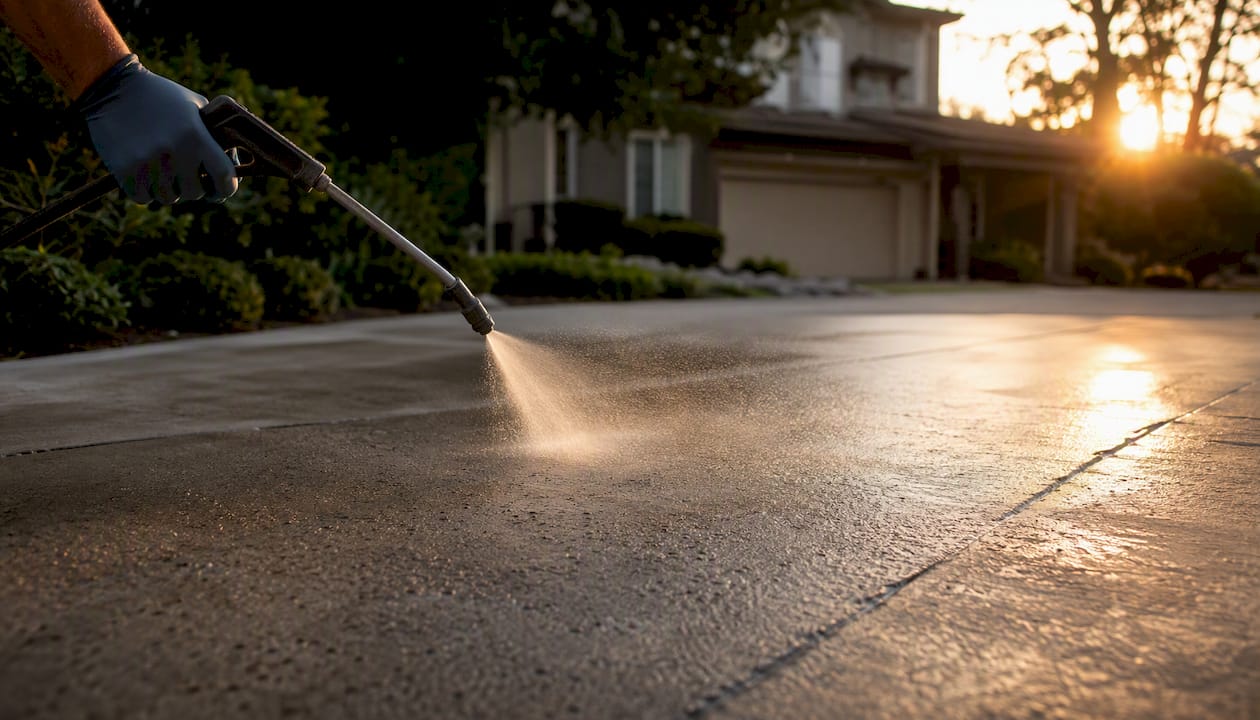
For most exterior driveways and patios, a penetrating siloxane or silane sealer delivers the best combination of invisible protection, breathability, and long-term durability. If you have a garage floor or stamped concrete, a film-forming system — epoxy base with a polyurethane or polyaspartic topcoat — gives you the gloss and chemical resistance those surfaces need. Not sure which applies to your slab? Request a free TrueSeal quote for your Wake County property and get a surface-specific recommendation without an on-site visit.
Here is what you need to know before choosing:
Penetrating sealers (silane, siloxane, siliconate, silicate) absorb into the concrete and protect from within. No film, no sheen, no peeling.
Film-forming sealers (acrylic, epoxy, polyurethane, polyaspartic) coat the surface and add gloss, color enhancement, and a wear layer.
The right choice depends on your surface type, traffic load, UV exposure, and whether you want a visible finish.
Moisture trapped beneath a film-forming sealer is the leading cause of blistering and delamination — surface prep matters more than product brand.
Pro Tip: If your driveway sits in full sun in Raleigh or Cary and sees regular vehicle traffic, skip the acrylic and go straight to a penetrating siloxane or a polyurethane-topped system. Acrylics on hot, sun-baked slabs tend to fail within 18 months.
Key Takeaways
Penetrating sealers (silane, siloxane) are the most durable choice for exterior driveways and high-chloride environments, while film-forming systems (epoxy plus polyurethane or polyaspartic topcoat) deliver the gloss and chemical resistance garage floors and decorative concrete need.
Point | Details |
Match sealer to surface | Penetrating silane/siloxane for exterior slabs; epoxy + polyurethane or polyaspartic for garage floors and decorative concrete. |
Recoat intervals vary widely | Silane/siloxane lasts 5–10 years; acrylics need reapplication every 1–3 years; polyurethane and polyaspartic run 3–7 years. |
Prep determines performance | Moisture trapped under a film-forming sealer causes blistering and delamination — surface prep matters more than product brand. |
Ask the right contractor questions | Confirm moisture testing, surface profile method, product solids %, cure time, and warranty terms before any work begins. |
TrueSeal for Wake County | TrueSeal’s remote assessment matches the right sealer system to your specific slab in Raleigh, Cary, Apex, Garner, and Wake County. |
Table of Contents
What are the main concrete sealer types and how do they compare?
How penetrating sealers protect your concrete from the inside out
Film-forming sealers: when gloss, color, and chemical resistance matter
Application, prep, and safety: what actually determines whether a sealer lasts
TrueSeal’s take: why surface-specific sealing beats a one-size-fits-all product
What TrueSeal offers for concrete and pavement protection in Wake County
What are the main concrete sealer types and how do they compare?
The two broad concrete sealer families — penetrating and film-forming — cover eight distinct subtypes, each with different penetration depths, film thicknesses, and ideal use cases. The table below maps the key tradeoffs so you can narrow your choice before calling a contractor.
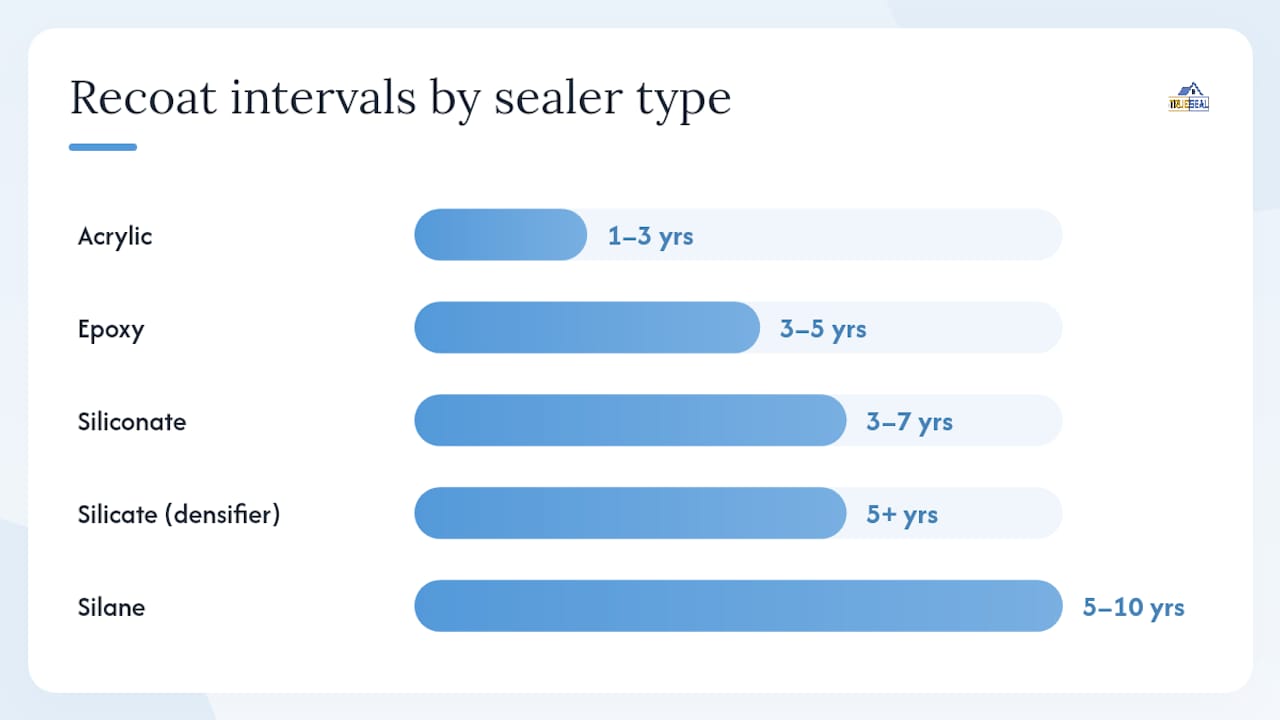
Sealer Type | Finish / Aesthetic | UV Stability | Penetrating vs Film | Best Surface | Recoat Interval | Abrasion / Chemical Resistance | Water-Based vs Solvent-Based |
Silane | Invisible | Excellent | Deep penetrating | Driveways, bridge decks, facades | 5–10 years | Moderate / High (chloride) | Solvent or water-based |
Siloxane | Invisible | Excellent | Surface-penetrating | Driveways, retaining walls, masonry | 5–10 years | Moderate / High (chloride) | Water-based common |
Siliconate | Invisible | Excellent | Surface-penetrating | Driveways, walkways, below-grade | 3–7 years | Moderate / Moderate | Water-based |
Silicate (densifier) | Invisible, matte | Excellent | Penetrating / reactive | Polished floors, warehouse slabs | 5+ years (hardener) | High / Moderate | Water-based |
Acrylic | Satin to high gloss | Fair (yellows over time) | Thin film | Stamped concrete, patios, pool decks | 1–3 years | Low–Moderate / Low | Both |
Epoxy | High gloss, wet-look | Poor (yellows outdoors) | Thick film | Garage floors (interior) | 3–5 years (with topcoat) | Very High / Very High | Both |
Polyurethane | Satin to gloss | Good–Excellent | Medium film | Garage floors, commercial slabs | 3–7 years | High / High | Both |
Polyaspartic | Satin to high gloss | Excellent | Thin–medium film | Garage floors, fast-turnaround projects | 3–7 years | Very High / High | Solvent-based common |
A few quick reads from this table: if UV exposure is your primary concern outdoors, epoxy alone is a poor choice — it yellows. If you want zero change to the look of your concrete, any penetrating type works. If you need fast return to service (a garage or commercial floor), polyaspartic is the standout.
Call a pro when you see any of these conditions:
Standing water or efflorescence on the slab (moisture problem before sealing)
Heavy vehicle traffic or forklift loads (requires a tested, high-build system)
Freeze-thaw cycles combined with deicing salt use (chloride protection is critical)
How penetrating sealers protect your concrete from the inside out
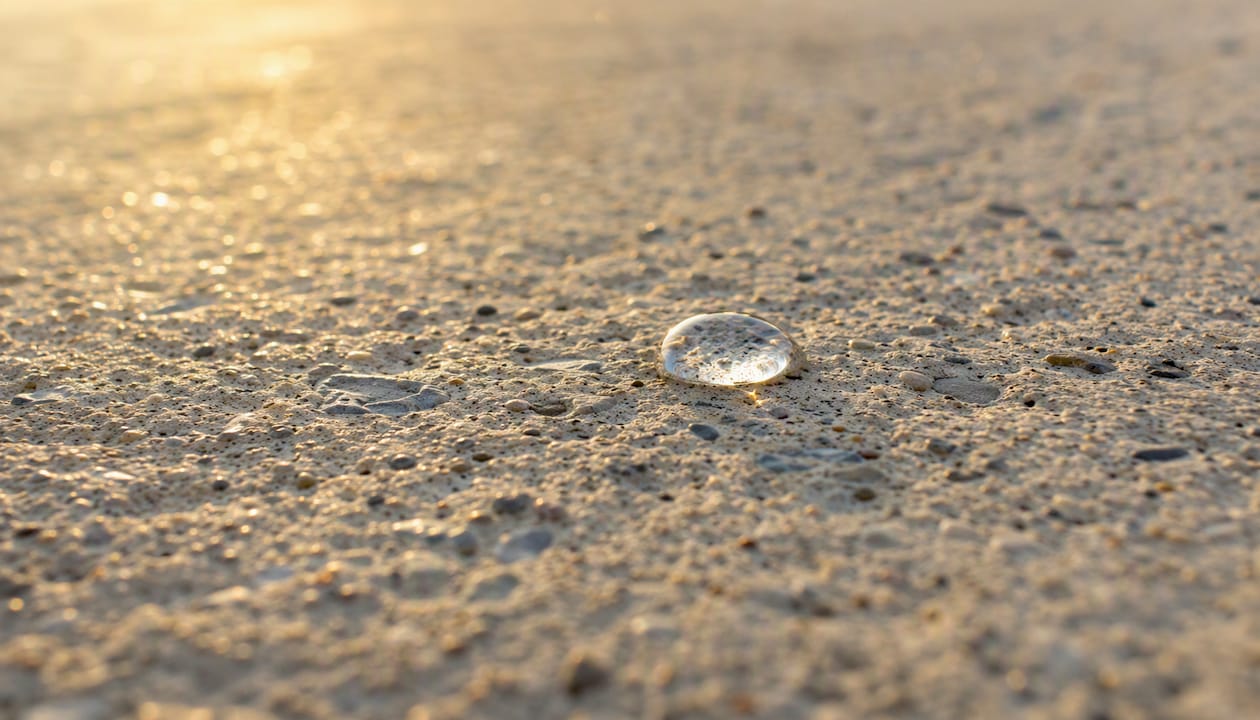
Penetrating sealers work by soaking into the concrete’s pore structure and either reacting chemically with the substrate or lining the pores with a hydrophobic material. The result is a barrier that repels water and chlorides without sitting on the surface as a film. Because the concrete can still breathe, moisture vapor moves out rather than building pressure under a coating.
Silane vs siloxane: which penetrates deeper?
Silane molecules are smaller, so they penetrate deeper into dense or low-porosity concrete. That depth is an advantage on bridge decks and dense exterior slabs, but silanes are more volatile — they can lose effectiveness if applied on a hot or windy afternoon. Siloxanes have a larger molecular range, cover more surface area per application, and are generally easier to apply correctly on residential driveways and retaining walls.
Field testing on concrete bridge decks found silanes and siloxanes among the best long-term performers for water and chloride protection in exterior, heavy-exposure applications, though results varied by product formulation and application conditions. NCHRP and state DOT field studies further confirm that penetrating sealers can provide several years of effective protection and that surface preparation timing is critical to that performance.
Siliconates and silicates: the densifier distinction
Siliconates react at the concrete surface and provide both water repellency and some hardening. They are a practical choice for driveways and walkways where you want a single-product solution without a film.
Silicates — specifically lithium silicate densifiers — work differently. They react with calcium hydroxide in the concrete to form additional calcium silicate hydrate, increasing surface hardness and reducing dusting. Lithium silicate is the preferred densifier in polished concrete workflows because it carries a lower efflorescence risk than sodium or potassium formulations. Densifiers are not water-repellents on their own; they are typically used as a hardening step before or alongside a topcoat or penetrating sealer.
Practical pros of penetrating sealers:
No film to peel, crack, or trap moisture
Invisible finish preserves the natural look of the concrete
Breathable — allows moisture vapor transmission
Strong chloride and water resistance for exterior slabs
Longer recoat intervals (5–10 years for silane/siloxane)
Cons to know:
No gloss or color enhancement
Cannot hide surface stains or discoloration
Silanes require careful application timing (temperature, wind)
Densifiers alone do not repel water
Field note: For driveways in Raleigh and Apex that see road salt tracked in from nearby streets, a silane-siloxane blend addresses chloride ingress directly — the same chemistry used on state DOT bridge decks.
Pro Tip: On a residential driveway, a silane-siloxane blend gives you the penetration depth of silane with the easier application of siloxane. Ask your contractor which blend ratio they use and why.
Film-forming sealers: when gloss, color, and chemical resistance matter
Film-forming sealers sit on top of the concrete as a protective coat. They add visible sheen, enhance color, and create a sacrificial wear layer that takes the abuse of traffic and UV before the concrete itself does. The tradeoff: they are sacrificial, meaning they wear down and need reapplication, and they can trap moisture if applied over a damp slab.
Acrylic sealers
Acrylics are the most widely used film-forming option for decorative exterior concrete — stamped patios, colored driveways, and pool decks. They come in water-based and solvent-based formulations. Solvent-based acrylics typically deliver stronger color enhancement and better penetration into decorative mixes, while modern water-based versions have narrowed the performance gap and carry a lower VOC profile. The catch: acrylics require reapplication every 1–3 years, more often than any other film-forming type.
Epoxy
Two-component epoxies bond tightly to concrete and offer very high chemical and abrasion resistance. They are the right base coat for a garage floor system. The problem outdoors: epoxy yellows under UV exposure. Used alone on an exterior slab, it will look amber within a season. The standard fix is a polyurethane or polyaspartic topcoat over the epoxy base, which gives you the adhesion and chemical resistance of epoxy with UV stability on top.
Polyurethane
One-component and two-component polyurethanes are UV-stable, flexible, and durable. They work well as standalone garage floor sealers or as topcoats over epoxy. Recoat intervals run 3–7 years depending on traffic. They do not self-level as readily as epoxy, so surface prep and application technique matter more.
Polyaspartic
Polyaspartic coatings cure fast — often walkable within hours — and tolerate a broader temperature range during application than epoxy. That makes them a practical choice for garage floors and commercial projects where downtime is a real cost. They are also UV-stable, which makes them a viable single-coat system outdoors. The tradeoff is that their fast cure time leaves less margin for error during application.
Film-forming sealer pros:
Visible gloss and color enhancement
Strong abrasion and chemical resistance (epoxy, polyurethane, polyaspartic)
Sacrificial wear layer protects the substrate
Wide range of sheens from matte to high-gloss
Film-forming sealer cons:
Moisture trapped beneath the film causes blistering and delamination
Epoxy yellows outdoors without a UV-stable topcoat
Acrylics need reapplication every 1–3 years
Slippery when wet — slip-resistance additives (such as aluminum oxide or polymer grit) are needed for pool decks and ADA-compliant surfaces
Solvent-based versions carry higher VOC loads and require ventilation
For stamped concrete restoration, a solvent-based acrylic or a water-based polyurethane with a color-enhancing base is typically the right call — it brings out the texture and color without the yellowing risk of epoxy.
How to choose the right sealer for your surface and budget
The right sealer is not the most expensive one — it is the one matched to your specific surface, exposure, and maintenance tolerance. Work through this checklist before buying or hiring.
Selection checklist:
UV exposure: Full sun on an exterior slab rules out epoxy alone and pushes you toward penetrating types or UV-stable film-formers (polyurethane, polyaspartic).
Traffic: Pedestrian-only patios tolerate acrylics well. Vehicle traffic on a driveway needs a penetrating sealer or a high-build polyurethane system. Forklifts or heavy equipment require a tested industrial system.
Deicing salt or coastal exposure: Penetrating silane or siloxane is the priority. Chloride ingress is the primary cause of rebar corrosion in exterior slabs.
Substrate condition: Cracks, spalling, or active moisture need to be addressed before sealing. A sealer is not a repair product.
Desired appearance: Want no change to the look? Go penetrating. Want gloss or color enhancement? Go film-forming.
Slip resistance: Pool decks, ramps, and any ADA-compliant surface need an additive or a textured finish — confirm this with your contractor.
Maintenance tolerance: If you want to seal and forget for 5–10 years, penetrating silane/siloxane is your best option. If you are comfortable with 1–3 year recoats, acrylics are lower upfront cost.
Coverage and cost reference:
Coverage drops significantly on porous or rough concrete — a broom-finish driveway will use more product per square foot than a troweled garage floor. Always test a small area first.
Questions to ask any contractor before signing:
What moisture test did you perform, and what was the reading?
What surface profile are you targeting, and how will you achieve it?
What is the solids percentage of the product you are applying?
What is the cure time before vehicle traffic?
Do you offer a warranty, and what voids it?
Red flags that mean walk away:
No surface prep beyond a quick rinse
Vague product specs (“a good sealer” with no brand or data sheet)
No mention of moisture testing
Pressure to decide same-day with no written estimate
For driveway sealing in Cary or anywhere in Wake County, TrueSeal’s remote assessment process lets you get a tailored recommendation before any crew shows up — a practical first step if you are unsure which system fits your slab.
Application, prep, and safety: what actually determines whether a sealer lasts
Professional contractors consistently point to surface preparation and moisture control as the primary determinants of long-term sealer success — not the product brand. A premium polyaspartic over a damp, unprepared slab will fail faster than a mid-grade acrylic over a properly prepped one.
Application steps in order:
Clean the surface. Pressure wash to remove dirt, oil, mildew, and any previous sealer residue. For oil stains, a degreaser application before washing is standard. See what to do before sealing a driveway for a full prep checklist.
Make repairs. Fill cracks and spalls before sealing. Sealer is not a filler — it will not bridge active cracks. For driveway crack prep, this repair guide covers the sequence well.
Check moisture. Tape a plastic sheet to the slab for 24 hours. Condensation underneath means the slab is too wet for a film-forming sealer. Penetrating sealers are more tolerant of residual moisture, but not saturated concrete.
Profile the surface if needed. Garage floors and commercial slabs going under epoxy or polyaspartic need mechanical profiling (shot blasting or diamond grinding) to achieve the right surface profile for adhesion.
Apply the sealer. Spray application gives more even coverage on large exterior slabs; roller application works well for smaller areas and film-forming products. Back-rolling after spraying a film-former removes bubbles and ensures even film thickness.
Apply second coat if specified. Most film-forming systems require two coats. Penetrating sealers are often single-application.
Allow full cure before traffic. Light foot traffic may be possible within hours for polyaspartic; vehicle traffic on a film-forming system typically needs 24–72 hours.
Maintenance and recoat timing:
Watch for water no longer beading on a penetrating sealer — that is your signal to reapply. For film-forming sealers, look for dullness, flaking, or visible wear before the surface itself starts to absorb stains. Recoat interval guidance by sealer family varies, but the table in the selection section above gives you a practical planning baseline.
Safety and VOC notes:
Water-based sealers carry lower VOC levels and are safer for indoor work and enclosed spaces. Solvent-based products require ventilation, chemical-resistant gloves, and proper disposal — check your local municipality’s guidelines for solvent waste. Temperature and humidity windows matter: most sealers should not be applied below 50°F or above 90°F, and relative humidity above 85% can compromise adhesion and cure.
Pro Tip: Apply silane-based penetrating sealers in the early morning or on overcast days. High heat and wind accelerate evaporation before the product can penetrate, wasting material and reducing effectiveness.
Field research note: NCHRP and state DOT studies on bridge deck sealers confirm that application timing and surface preparation are as critical to long-term performance as product selection itself — a finding that applies equally to residential driveways and commercial pavements.
TrueSeal’s take: why surface-specific sealing beats a one-size-fits-all product
Most sealer failures we see in Wake County come down to one of two things: the wrong product for the surface, or the right product applied over inadequate prep. A homeowner in Garner with a shaded, north-facing driveway has different needs than a property manager in Apex with a sun-baked commercial parking lot. Treating them the same way is how you end up with peeling, blistering, or a sealer that lasts 18 months instead of seven years.
TrueSeal’s process starts with a remote digital assessment — you share photos and surface details, and we evaluate traffic patterns, sun exposure, existing condition, and moisture risk before recommending a system. That step alone eliminates most of the guesswork that leads to callbacks. When the project warrants it, on-site verification confirms moisture readings and surface profile before any product is selected. The goal is a sealer plan that fits your specific slab, not the most popular product on a shelf.
If you are a homeowner or property manager in Raleigh, Cary, Apex, Garner, or anywhere in Wake County and you are not sure which sealer family fits your surface, request a quote and let us assess it properly.
What TrueSeal offers for concrete and pavement protection in Wake County
Choosing the right sealer is only half the equation. Proper application by a contractor who knows surface prep, moisture testing, and product systems is what makes the protection last.
[
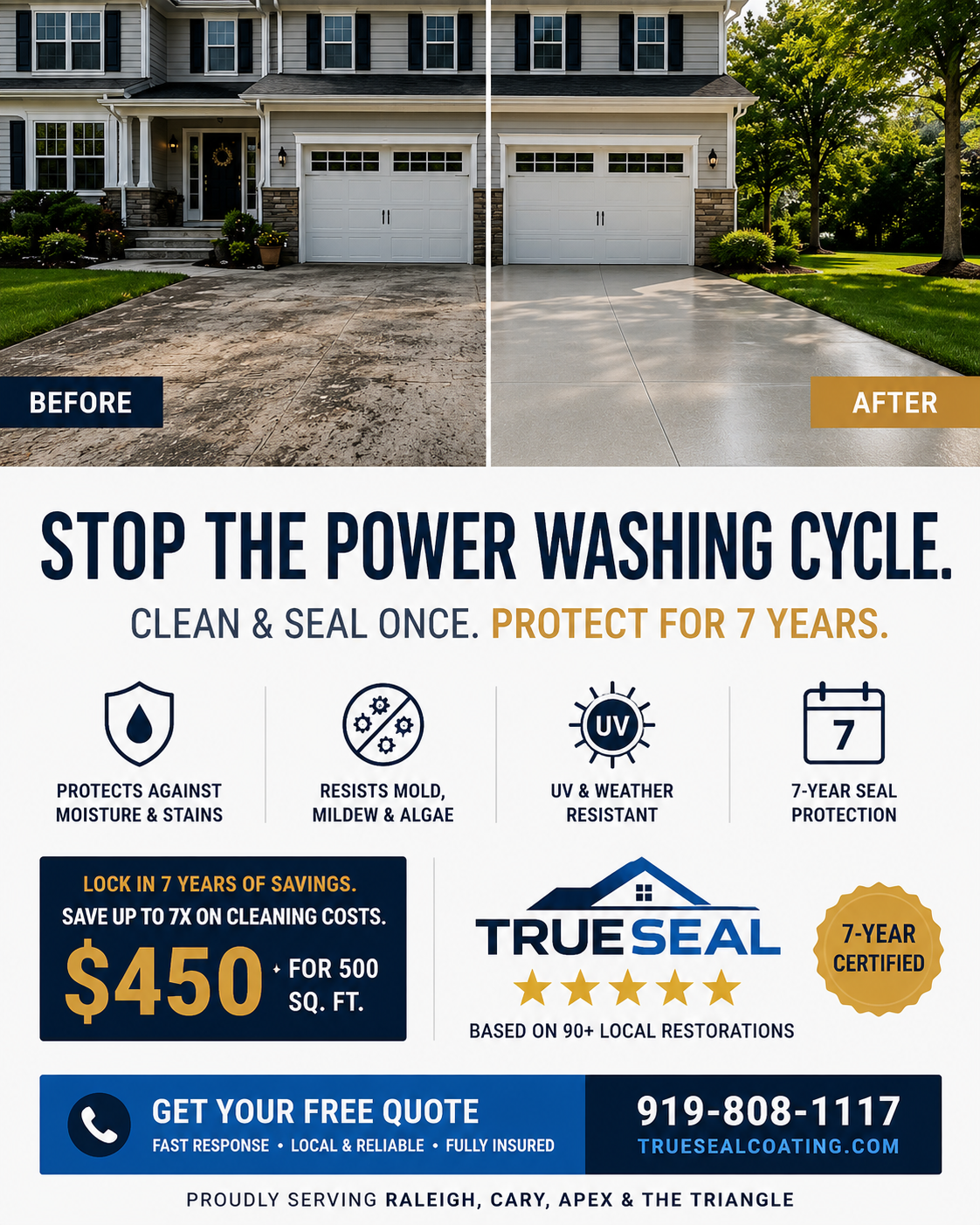
TrueSeal handles the full scope of concrete and pavement protection for residential and commercial properties across Wake County:
Concrete cleaning and long-term sealing for driveways, patios, and walkways
Stamped concrete restoration and color-enhancing sealing
Paver cleaning, polymeric sand replacement, and paver sealing
Commercial sealcoating and ADA-compliant parking lot striping
Asphalt sealcoating for driveways and parking lots
The process is straightforward: submit photos through TrueSeal’s remote assessment portal, receive a tailored protection plan and quote, and schedule the work. On-site verification handles moisture checks and surface profiling before any product goes down. Most residential projects in Raleigh, Cary, Apex, and Garner are completed in a single day with a clear cure timeline before you need the surface back.
For commercial properties and property managers in Wake County, TrueSeal’s commercial services cover high-traffic slabs, parking lots, and multi-unit hardscapes with the same surface-specific approach.
Get a quote for your Wake County property and find out exactly which system fits your surface.
Sources
FAQ
What are the different types of concrete sealers?
Concrete sealers fall into two families: penetrating (silane, siloxane, siliconate, silicate/densifier) and film-forming (acrylic, epoxy, polyurethane, polyaspartic). Each type differs in penetration depth, finish, UV stability, and ideal surface application.
Is it better to spray or roll concrete sealer?
Spray application gives more even coverage on large exterior slabs and penetrating sealers; rolling works well for film-forming products on smaller areas and helps eliminate bubbles when back-rolled after spraying. Many professional applications combine both methods.
What are the downsides of using concrete sealer?
Film-forming sealers can trap moisture and blister if applied over a damp slab, require periodic reapplication (every 1–3 years for acrylics), and become slippery when wet without a slip-resistance additive. Penetrating sealers have fewer failure modes but provide no gloss or color enhancement.
How long does concrete sealer last before reapplication?
Silane and siloxane penetrating sealers typically last 5–10 years in field conditions; polyurethane and polyaspartic film-formers run 3–7 years; acrylics need reapplication every 1–3 years depending on traffic and sun exposure. See TrueSeal’s concrete sealer lifespan guide for surface-specific intervals.
When should a homeowner hire a pro instead of sealing themselves?
Hire a contractor when the slab shows active moisture, cracks needing structural repair, or heavy vehicle traffic that requires a tested multi-coat system. Epoxy and polyaspartic applications also require mechanical surface profiling and precise mixing that make DIY application high-risk.


Comments