Stamped Concrete Cleaning, Color Restoration, and Resealing in Raleigh, NC

Updated: Aug 16
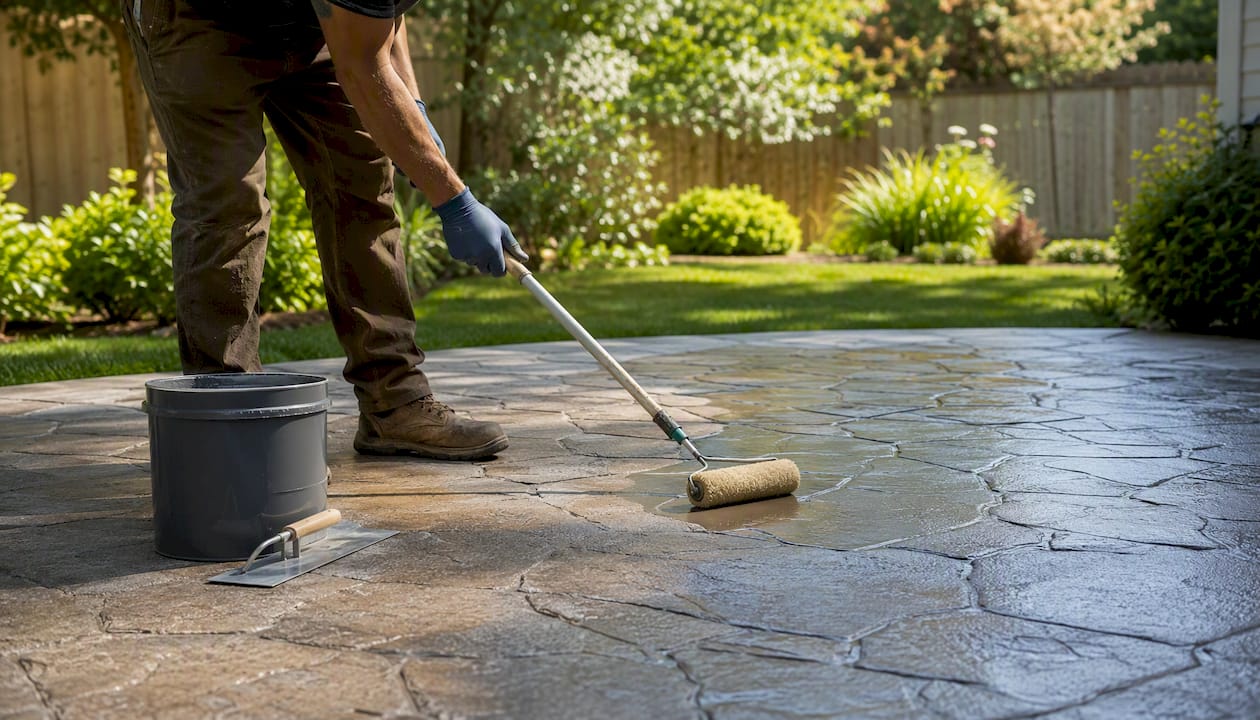
Your stamped concrete needs professional cleaning, color restoration, and resealing when you see faded color, lost sheen, or water soaking into the slab instead of beading up. If any of those signs are present, schedule service now and request a TrueSeal quote before surface damage deepens.
Three quick ways to confirm your surface needs attention:
Faded color or dull finish: The decorative tones look washed out or flat compared to when the concrete was new.
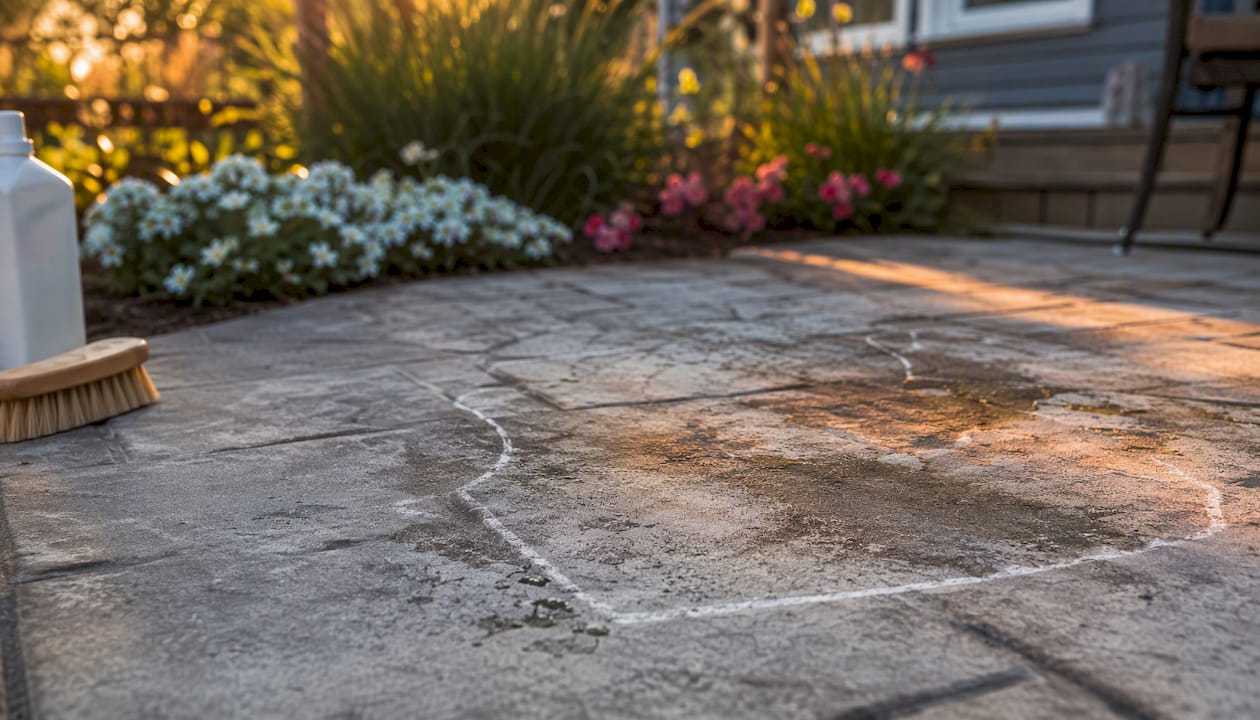
Water bead test fails: Sprinkle water on the slab. If it soaks in and darkens the surface rather than beading, the sealer has worn through.
Flaking, spalling, or white haze: Visible peeling or a chalky film means the sealer is actively failing.
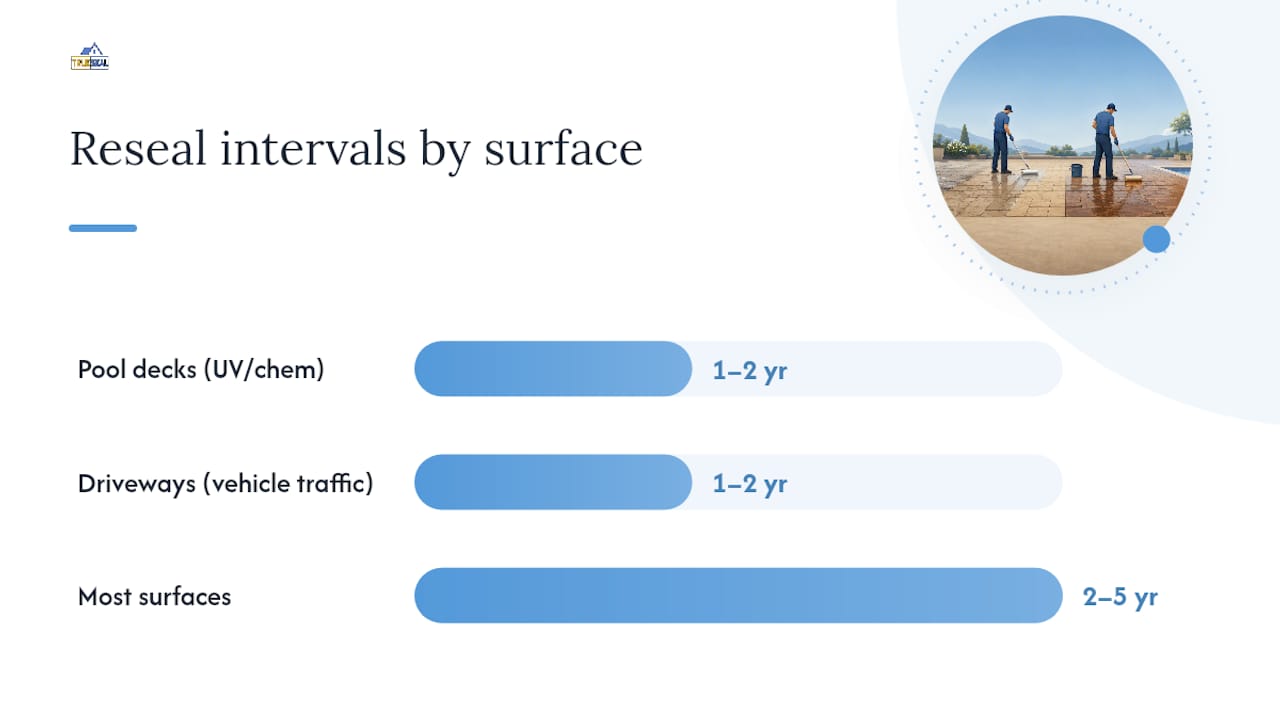
Most Wake County patios and driveways fall on a 2–5 year reseal schedule depending on traffic and exposure. Pool decks and driveways with vehicle traffic often need attention every 1–2 years; shaded, low-traffic walkways can stretch to 3–5 years.
Key Takeaways
Stamped concrete in Wake County needs professional cleaning, color restoration, and resealing when the water bead test fails, color has faded, or the sealer shows flaking — and most surfaces reach that point every 2–5 years.
Point | Details |
Primary warning signs | Faded color, failed water bead test, or visible flaking/spalling signal sealer failure. |
Reseal frequency | Most Wake County surfaces need resealing every 2–5 years; pool decks and high-traffic driveways often every 1–2 years. |
Strip vs. recoat | Bubbling or peeling means the old sealer must be stripped before new sealer is applied. |
Best timing | Spring and early fall (50°F–90°F) give optimal cure conditions in the Raleigh/Cary area. |
TrueSeal | Offers remote assessment, full restoration, written estimates with sealer specs, and before-and-after documentation for Wake County properties. |
Table of Contents
How Wake County’s environment affects your maintenance schedule
Raleigh and Cary sit in a climate that pushes stamped concrete hard. Long summers with intense UV exposure bleach color from acrylic sealers faster than in cooler regions. Seasonal rain, freeze-thaw cycles in winter, and humidity-driven mildew growth all accelerate sealer breakdown. Pool decks face an additional stressor: chlorine and pool chemicals degrade acrylic coatings at the surface level, often cutting a typical reseal interval in half.
Wake County does not impose specific residential maintenance permits for resealing, but runoff from cleaning chemicals is subject to local stormwater rules. A professional contractor uses biodegradable cleaning agents and controls wash water to stay within those guidelines, which is one more reason to hire rather than DIY.
When is the best time of year to reseal stamped concrete?
Spring and early fall are the optimal windows in Wake County. Temperatures between 50°F and 90°F with low humidity let the sealer cure evenly and bond properly. Avoid scheduling work in July or August when midday heat can cause solvent-based sealers to bubble, or in December through February when overnight lows risk freezing a freshly applied coat before it cures.
Pro Tip: If your surface needs cleaning and color restoration, schedule the full job in April or October. You get ideal cure conditions and avoid the summer backlog that pushes contractor availability out by weeks.
How to prepare before your contractor arrives
A little prep on your end speeds up the job and protects your property.
Move all furniture, planters, grills, and decorative items off the surface completely.
Cover nearby plants and shrubs with plastic sheeting; cleaning agents and sealer overspray can damage foliage.
Clear the driveway of vehicles and keep them off the surface for at least 24 hours after sealing.
Note any cracks, stains, or areas of concern so you can point them out during the inspection.
Avoid watering landscaping adjacent to the slab the day before; wet soil slows drying and can introduce moisture under the sealer.
Why waiting costs more than maintaining
Proactive resealing is the single most cost-effective thing you can do for stamped concrete. The sealer functions as a sacrificial protective layer designed to wear away gradually so the decorative surface beneath does not. When that layer is gone and the concrete is left exposed, UV, moisture, and traffic begin degrading the surface itself. Spalling and color loss follow, and those repairs cost significantly more than a routine reseal.
In Wake County, UV intensity and seasonal rain are the two factors we see accelerate wear most consistently. A pool deck in Cary with direct sun exposure and weekly chemical contact can lose effective sealer protection in under two years. A shaded patio in Apex with foot traffic only may hold for four. The difference is not random; it is exposure-driven, and a professional assessment reads those variables accurately.
When bubbling or widespread peeling is present, a simple recoat will not hold. The old sealer must be stripped first, the surface cleaned and repaired, and then new sealer applied in thin, even coats. That strip-and-reseal process requires professional equipment and product knowledge. A DIY recoat over a failing sealer traps moisture and fails within months.
Acrylic sealers are the standard choice for decorative stamped concrete because they enhance color and block UV. Penetrating silane/siloxane sealers last longer and suit surfaces where a natural look is preferred, but they do not restore color. Matching the new sealer to what is already on the slab matters; incompatible products cause adhesion failure. A pro identifies the existing sealer type before recommending a product.
TrueSeal handles stamped concrete restoration in Raleigh, Cary, and Wake County
Skip the guesswork on sealer type, strip-vs-recoat decisions, and application timing. TrueSeal’s stamped concrete restoration service covers the full process: remote digital assessment, surface cleaning and prep, optional color restoration using tinted sealers or professional re-staining, crack and spall repair, sealer selection matched to your existing finish, and two thin application coats with proper cure time. Most residential patios and driveways complete in a single day or a weekend depending on prep needs. Every job comes with a written estimate that specifies the sealer product, and before-and-after photos document the result.
[
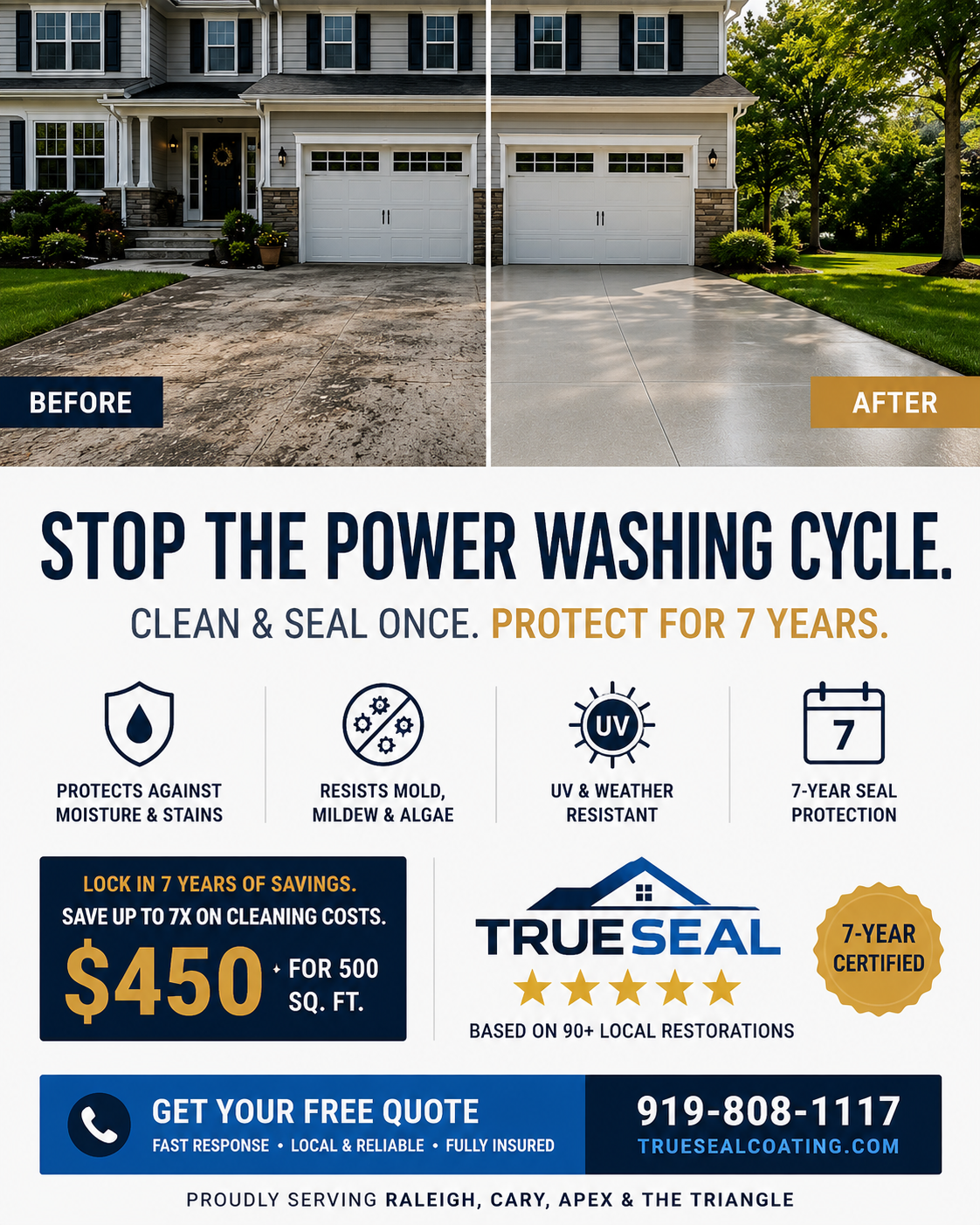
To get a faster quote, have your approximate square footage, a photo of the current surface condition, and the age of the last reseal ready. Contact TrueSeal to request your assessment and get a written estimate with sealer specification.
Sources
FAQ
How often should stamped concrete be resealed in Wake County?
Most surfaces need resealing every 2–5 years. Pool decks and driveways with vehicle traffic often fall closer to the 1–2 year end of that range due to UV and chemical exposure.
What does the water bead test tell you?
Sprinkle water on the slab. If it beads, the sealer is still working. If it soaks in and darkens the concrete, the sealer has worn through and resealing is overdue.
Can you reseal stamped concrete without stripping the old sealer?
Only if the existing sealer is in good condition with no bubbling or peeling. Widespread flaking or delamination requires a full strip before new sealer will bond properly.
What is the cost to reseal stamped concrete professionally?
Contractors typically charge $1.50–$3.50+ per square foot for resealing; stripping, color restoration, or crack repair add to that base cost depending on the scope of work.
Does TrueSeal offer remote assessments for stamped concrete?
Yes. TrueSeal evaluates surface condition digitally from photos you submit, then provides a written estimate with sealer specification before any on-site work begins.


Comments