How to Remove Oil Stains on Wake County, NC Driveway Surfaces

Updated: Aug 12
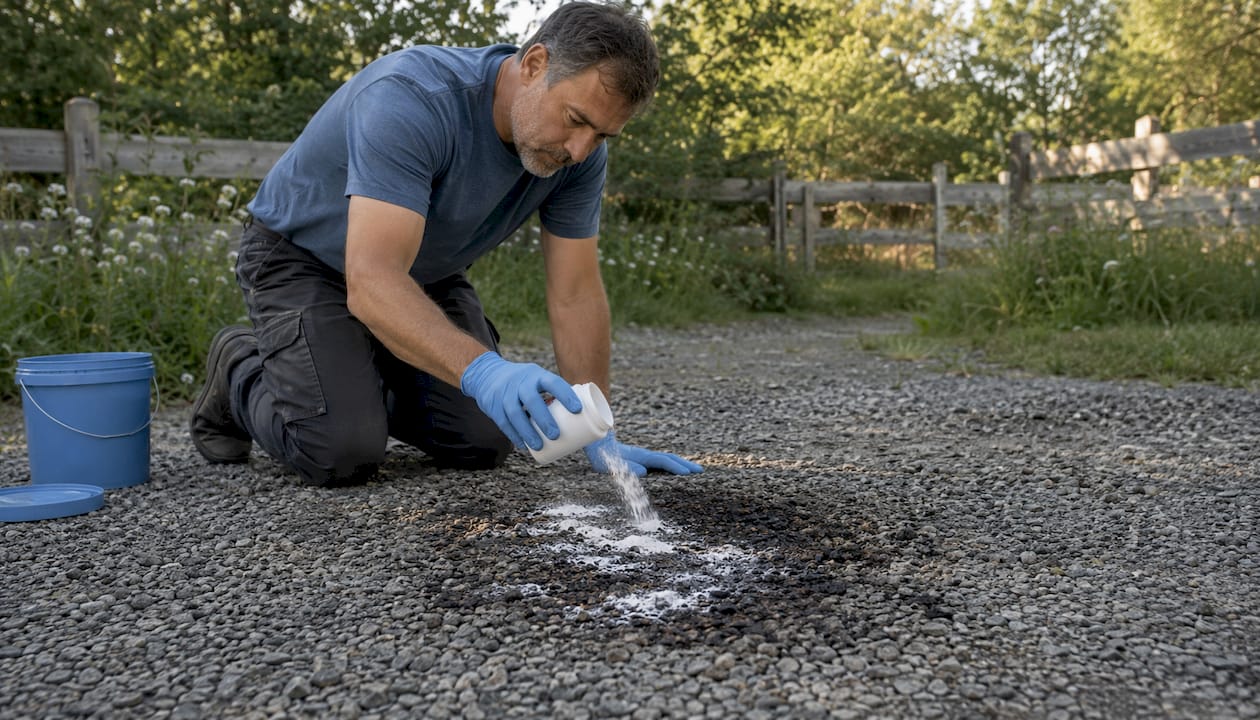
Oil stains on driveway surfaces form chemical bonds inside porous concrete and asphalt, which is why scrubbing alone rarely works. The hydrocarbons in motor oil penetrate deep into the surface within minutes of a spill, making timing and technique the two factors that determine whether a stain comes out cleanly or stays for years. This guide covers material-specific methods for fresh and set-in stains, the right products to use, and the mistakes that make things worse. Whether you manage one driveway in Cary or a parking lot across Wake County, the same principles apply.
What tools and materials do you need to remove oil stains?
Effective oil stain removal starts with having the right supplies on hand before you touch the stain. Using the wrong product on the wrong surface is one of the most common reasons DIY attempts fail or cause damage.
Absorbents draw oil out of the surface through capillary action. The three most reliable options are:
Cornstarch — fine grain, works well on fresh spills on both concrete and asphalt
Baking soda — slightly alkaline, doubles as a mild degreaser on concrete
Clay-based kitty litter — coarser grain, best for large spills where you need volume
Degreasers break the chemical bond between oil and the surface. Your choice depends on the driveway material. Concrete and asphalt require different cleaning chemistries. Alkaline or acidic cleaners work well on concrete because they can lightly etch the surface layer to release contamination. Citrus-based or non-solvent degreasers are the right choice for asphalt. Petroleum-based solvents will dissolve asphalt’s binder and cause permanent damage.
Material | Recommended Absorbent | Recommended Degreaser |
Concrete | Baking soda or cornstarch | Alkaline or acidic cleaner |
Asphalt | Clay-based kitty litter | Citrus-based or non-solvent degreaser |
Pavers | Cornstarch | pH-neutral degreaser |
Cleaning tools you will need: a stiff nylon brush (never metal on asphalt), chemical-resistant gloves, plastic sheeting to protect surrounding areas, and a garden hose with a spray nozzle. Avoid using a pressure washer as your first step. Cold water pressure washing drives oil deeper into concrete pores and makes removal significantly harder.
Pro Tip: Keep a small container of baking soda or cornstarch in your garage. The faster you cover a fresh drip, the less it bonds to the surface.
How to remove fresh oil stains from concrete and asphalt
Speed is the single most important factor with fresh spills. Oil begins bonding to porous surfaces within minutes, so your first action determines how much work the rest of the process requires.
Step 1: Blot, do not scrub. Use a clean rag or paper towels to blot up as much surface oil as possible. Press down firmly and lift straight up. Scrubbing a fresh stain forces oil deeper into the pores, which is the opposite of what you want.
Step 2: Apply your absorbent. Pour a generous layer of baking soda, cornstarch, or clay-based kitty litter directly over the stain. Press and grind it into the surface using your foot or a stiff brush. You want the absorbent packed into the pores, not just sitting on top.
Step 3: Allow a full dwell time. A 12–24 hour dwell time is required for effective capillary action on a fresh oil spill. Covering the absorbent with plastic sheeting overnight keeps it from blowing away and holds moisture in, which improves extraction.
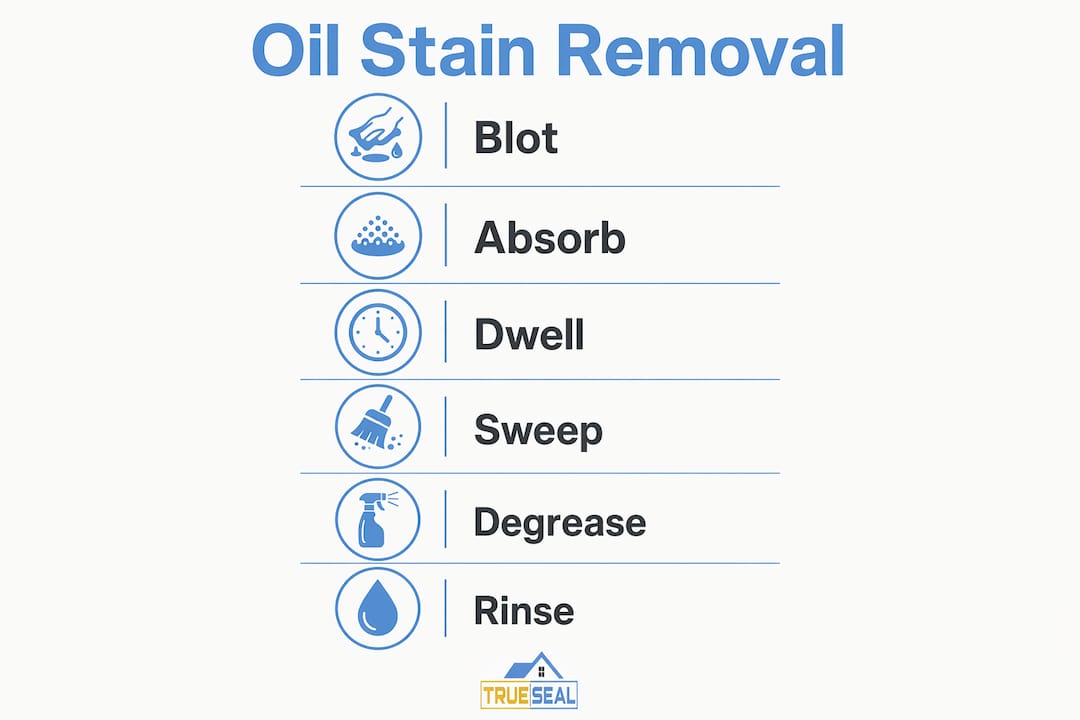
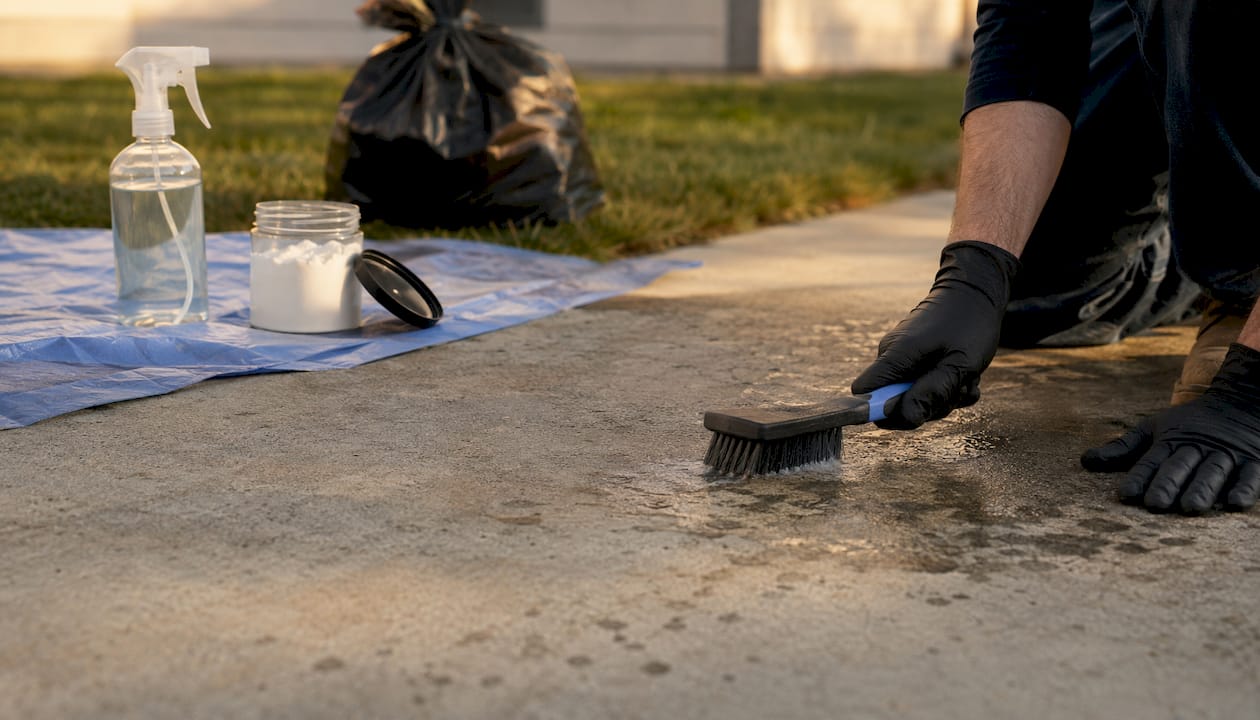
Step 4: Sweep and apply degreaser. Sweep up the spent absorbent and dispose of it in a sealed bag. Apply your chosen degreaser directly to the stain. For concrete, work it in with a stiff nylon brush using circular motions. For asphalt, use lighter pressure to avoid surface abrasion.
Step 5: Time your application carefully. Chemical cleaners work best below 85°F surface temperature. Above that threshold, degreasers evaporate too quickly and leave behind residue that attracts more dirt. In Cary’s warm summers, morning hours between 7:00 AM and 10:00 AM give you the best working conditions.
Step 6: Rinse thoroughly. Rinse with warm water and a garden hose. Avoid directing runoff toward storm drains. Many US municipalities prohibit oily runoff into storm drain systems, and wastewater from oil stain cleaning is classified as hazardous in many jurisdictions. Contain and dispose of it properly.
Pro Tip: If the stain is still visible after one cycle, repeat the degreaser step before rinsing. One application is rarely enough for a spill that sat for more than an hour.
How do you treat old, set-in oil stains on driveways?
Set-in stains require a different approach because the oil has already cured inside the pores. Standard degreasers applied and rinsed quickly will not reach deep enough to lift the contamination.
Poultice method — Mix baking soda or flour with enough degreaser to form a thick paste. Apply a layer roughly half an inch thick over the stain. Cover it tightly with plastic wrap and tape down the edges to prevent drying. Leave it for 24–48 hours. The poultice draws oil out slowly as it dries, pulling contamination toward the surface.
Enzymatic cleaners — Biological enzymatic cleaners use microorganisms to break down hydrocarbon molecules at the molecular level. They work more slowly than chemical degreasers but penetrate deeper and are less likely to damage the surface. Apply the cleaner, cover with plastic wrap to extend the dwell time, and allow 24–48 hours before rinsing.
Removing a set-in oil stain is almost always a multi-cycle process. One treatment lifts a portion of the contamination. The second treatment reaches what the first one loosened. Expecting a single application to fully clear a stain that has cured for weeks is the most common reason homeowners give up too early.
A few additional points for older stains:
Never use petroleum-based solvents on asphalt, even for stubborn stains. Petroleum solvents dissolve asphalt binders and cause pitting and softening that cannot be reversed.
Concrete can tolerate stronger alkaline cleaners that lightly etch the surface, which helps release deeply bonded contamination.
Multiple treatment cycles are normal. Allow the surface to dry fully between cycles so you can assess progress accurately.
When stains cover a large area or have been present for more than a year, professional cleaning equipment with heated water at 180–200°F reaches contamination that consumer products cannot.
For severe cases, reviewing your options with a driveway restoration specialist before spending money on repeated DIY attempts is worth the time.
How to avoid damaging your driveway while cleaning oil stains
The cleaning process itself can cause permanent surface damage if you use the wrong products or techniques. Knowing what to avoid is just as important as knowing what to do.
Avoid these common mistakes:
Using petroleum-based solvents on asphalt. Strong solvents cause binder dissolution and surface degradation on asphalt driveways. The surface will pit, soften, and lose structural integrity.
Pressure washing too early or with cold water. Pressure washing before chemical treatment drives oil deeper into the surface. Cold water alone cannot emulsify oil. Emulsifiers and hot water are critical to lifting oil from pores effectively.
Applying degreasers in direct afternoon sun. Surface temperatures above 85°F cause premature evaporation, which leaves a residue film that attracts dirt and makes the stain appear worse after drying.
Scrubbing fresh spills. This is the single most damaging first response. Blotting and absorbing always comes before any mechanical action.
Skipping a patch test. Always test any new degreaser on a small, hidden area of your driveway first. Some products discolor certain concrete finishes or sealers.
Pro Tip: Before applying any cleaner to a large stain, test it on a 6-inch patch near the edge of the driveway. Wait 10 minutes and check for discoloration or surface change. This takes two minutes and can save you from a much bigger problem.
Timing your cleaning session also matters. The optimal working window in warmer climates is morning hours when the surface is cooler and chemical penetration is more effective. This applies directly to Cary’s climate from late spring through early fall.
Best practices to prevent future oil stains on your driveway
Prevention costs far less than removal. A few consistent habits protect your driveway surface and reduce the time you spend dealing with stains.
Use drip trays under parked vehicles. A simple oil drip tray under your car’s engine catches leaks before they reach the surface. This is the lowest-effort prevention available.
Clean fresh drips immediately. Early treatment of small fresh drips is far easier and more environmentally responsible than tackling long-term stains. Keep absorbent powder accessible in your garage.
Seal your driveway surface. A quality penetrating sealer fills the pores in concrete and asphalt, creating a barrier that slows oil absorption significantly. Film-forming sealers add a surface layer that makes spills easier to wipe up before they bond. Reviewing power washing timing before sealing helps you plan the right sequence.
Schedule routine inspections. Walk your driveway monthly and look for fresh drips near where vehicles park. Catching a small spot early takes minutes to address. Ignoring it for a season means a much harder removal job.
Time your sealing correctly. In North Carolina, late spring and early fall offer the best conditions for sealing. Moderate temperatures allow sealers to cure properly without the heat-related issues that affect summer applications.
Professional sealing provides a level of surface protection that consumer-grade products cannot match. A properly sealed driveway resists oil penetration, UV fading, and moisture damage simultaneously.
Key Takeaways
Removing oil stains from driveways requires material-specific products, correct timing, and a blot-absorb-emulsify sequence rather than scrubbing or pressure washing alone.
Point | Details |
Act immediately on fresh spills | Blot excess oil and apply absorbent within minutes to prevent deep bonding. |
Match your cleaner to your surface | Use alkaline degreasers on concrete and citrus-based products on asphalt to avoid damage. |
Allow full dwell times | Absorbents need 12–24 hours and poultices need 24–48 hours to draw oil out effectively. |
Avoid heat and pressure washing early | Apply degreasers below 85°F and only use pressure washing after chemical treatment. |
Seal your driveway to prevent future stains | A quality sealer fills surface pores and makes future spills far easier to clean up. |
What we have learned from years of treating driveway stains in Cary
We see the same pattern repeatedly. A homeowner notices an oil stain, grabs a bottle of degreaser from the hardware store, scrubs hard for 20 minutes, rinses it off, and then wonders why the stain looks the same or worse. The problem is not effort. The problem is sequence.
Oil does not sit on top of concrete or asphalt. It moves into the pores within minutes and begins bonding to the mineral structure of the surface. Once that bond forms, mechanical scrubbing cannot break it. You need chemistry, specifically an emulsifier that surrounds the oil molecule and allows water to carry it away. That process takes time, which is why dwell times matter more than elbow grease.
The other mistake we see constantly is using the wrong product on asphalt. Asphalt is a petroleum-based material. Applying a petroleum solvent to it is like trying to clean a wax candle with more wax. The solvent does not clean the stain. It softens the binder that holds the asphalt together, and the damage shows up weeks later as pitting and crumbling at the surface.
The homeowners who get the best results are the ones who treat their driveways as a surface worth maintaining, not just cleaning. A sealed driveway in Cary handles oil drips, summer heat, and North Carolina’s wet winters far better than an unsealed one. The stains that require hours of work on a bare concrete surface wipe up in minutes on a properly sealed one. That is not a sales point. That is just how surface chemistry works.
— TrueSeal
Protect your Cary driveway before the next spill
If your driveway absorbs water instead of beading it, the surface is open to oil penetration too. That means every drip from a parked car is working its way into the pores right now.

Truesealcoating’s Clean & 7-Year Seal system is designed specifically for North Carolina conditions. We clean the surface thoroughly, treat any existing staining, and apply a high-performance sealer that protects against oil, moisture, UV exposure, and weathering for years. The result is a driveway that looks better and requires far less maintenance. Property managers in Wake County can explore our commercial surface protection options for parking lots and multi-unit properties. Request your free quote today and get a professional surface assessment at no cost.
FAQ
How do you get oil stains out of a concrete driveway?
Apply a dry absorbent like baking soda or cornstarch, press it into the stain, and allow 12–24 hours of dwell time before sweeping and applying a degreaser. Rinse with warm water after the degreaser has had time to emulsify the oil.
Can old oil stains be removed from asphalt?
Yes, but they require a poultice or enzymatic cleaner with an extended dwell time of 24–48 hours. Never use petroleum-based solvents on asphalt, as they dissolve the surface binder and cause permanent damage.
Does pressure washing remove oil stains from driveways?
Pressure washing alone does not remove chemically bonded oil stains. Cold water pressure washing can actually drive oil deeper into the surface. Hot water combined with an emulsifying degreaser is required for effective removal.
What is the best time of day to clean oil stains from a driveway?
Morning hours between 7:00 AM and 10:00 AM are best. Surface temperatures below 85°F allow degreasers to penetrate fully without evaporating too quickly or leaving residue deposits.
How do you prevent oil stains from coming back?
Use a drip tray under parked vehicles, clean fresh spills immediately with an absorbent powder, and seal your driveway with a penetrating or film-forming sealer. A sealed surface absorbs oil far more slowly, giving you time to clean spills before they bond.
Recommended
Comments